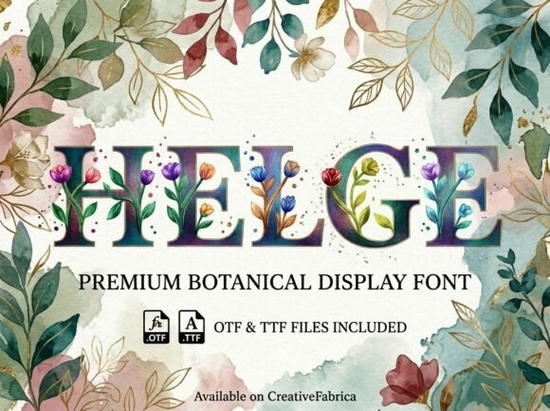
Finding the right typography for botanical branding can take hours of searching and combining different graphic assets. If you want to skip the complex illustration process, the Helge Font offers a built-in solution. This display typeface combines stately serif uppercase letters with hand-painted watercolor tulips, garden vines, and delicate ink splatters. It is specifically designed for independent botanical skincare lines, custom luxury florist logos, and premium organic tea packaging. For designers, crafters, and print-on-demand sellers, having letters that already feature sprawling floral stems saves significant time on layout and composition.
What kind of projects work best with this botanical lettering?
Because the characters are highly detailed and feature rich jewel-toned gradient frames, this typeface is not meant for long paragraphs of body text. It functions best as a primary focal point. Small businesses can use these letters for storefront signage, fine art gallery exhibition titles, and high-impact social media graphics. Print-on-demand sellers often utilize similar detailed typography to create striking canvas wall art or premium greeting cards. When building a complete brand identity, pairing a heavily illustrated display option with a simpler typeface is standard practice. For instance, if you need a clean, modern contrast to balance the heavy watercolor details, you might look at minimalist sans-serif options or explore structured brush scripts for secondary text.
How do you balance intricate letterforms with busy backgrounds?
When working with heavily embellished letters that include golden leaf borders and soft watercolor washes, white space is your most important tool. Placing these detailed characters over busy patterns will make your design look cluttered and difficult to read. Stick to solid, muted backgrounds like cream, sage green, or soft blush pink. If your project requires a lighter, airier aesthetic without the heavy frames, the lighter floral lettering might suit a minimalist wedding invitation better. Alternatively, if you want an illustrative feel with a rougher texture, exploring rougher hand-drawn styles provides a nice alternative approach to textured branding. You can always review the specific installation details and included file formats on the product page for this display typeface.
Why choose watercolor elements for product packaging?
Watercolor textures convey an organic, human touch that flat vector graphics sometimes lack. According to historical practices in watercolor painting, the unpredictable blending of pigments creates unique, unrepeatable variations. When applied to commercial packaging or custom branding, this organic luxury builds a sense of exclusivity. Customers associate these hand-painted details with artisanal quality, making it a smart choice for premium organic tea brands or high-end skincare labels. For creative hobbyists making homemade soaps or candles, this style immediately signals a natural, small-batch product.
What is the best way to prepare these files for print?
Since the letterforms contain complex gradients, delicate ink splatters, and soft edges, exporting your final artwork correctly is crucial to avoid blurry results. Always check your color profiles before sending files to a professional printer or producing physical items at home.
- Convert text to outlines: Change your text to shapes in your design software before exporting. This ensures the printer does not need to have the specific typeface installed on their computer system.
- Use the correct color mode: Work in CMYK color mode if you are printing physical products like tea boxes or cosmetic labels, as this accurately matches the ink process used by commercial presses.
- Maintain high resolution: Save your final artwork as a high-resolution PDF or a 300 DPI PNG with a transparent background to ensure the watercolor edges remain crisp for digital mockups.
- Mind your scale: Avoid scaling the text down too small. The intricate vine details and golden leaves will lose their definition and bleed together if printed at tiny sizes.
- Test print-then-cut settings: Crafters using cutting machines should use the solid uppercase base as a reliable cut line, applying the watercolor details using a print-then-cut method.
Start your next packaging project by testing a few short brand names using these decorative uppercase characters. Keep your background clean, pair it with a readable sans-serif for the subtext, and let the floral illustrations do the heavy lifting for your design.
Explore Design Boldrix Font: a Modern Designer's Toolkit
 Razora Font: Design Inspiration & Use Cases
 Super Robocop Font: Designs & Creative Projects
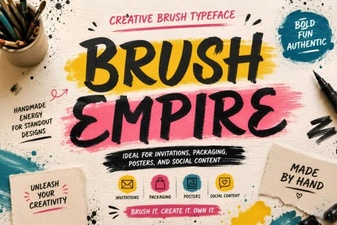 Brush Empire Font for Creative Design Projects
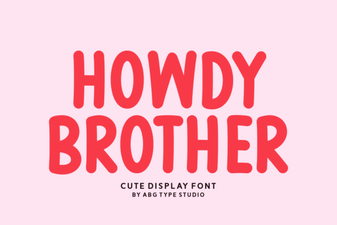 Howdy Brother Font: Free Download & Creative Uses
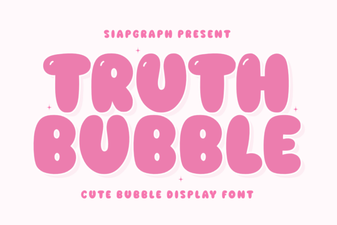 Truth Bubble Font for Your Creative Projects